
Nougat Noir
A Christmas tradition in southern France, this soft caramel-like indulgence, bursting with almonds and pistachios, is crunchy, salty and sweet, with hints of citrus and spice.



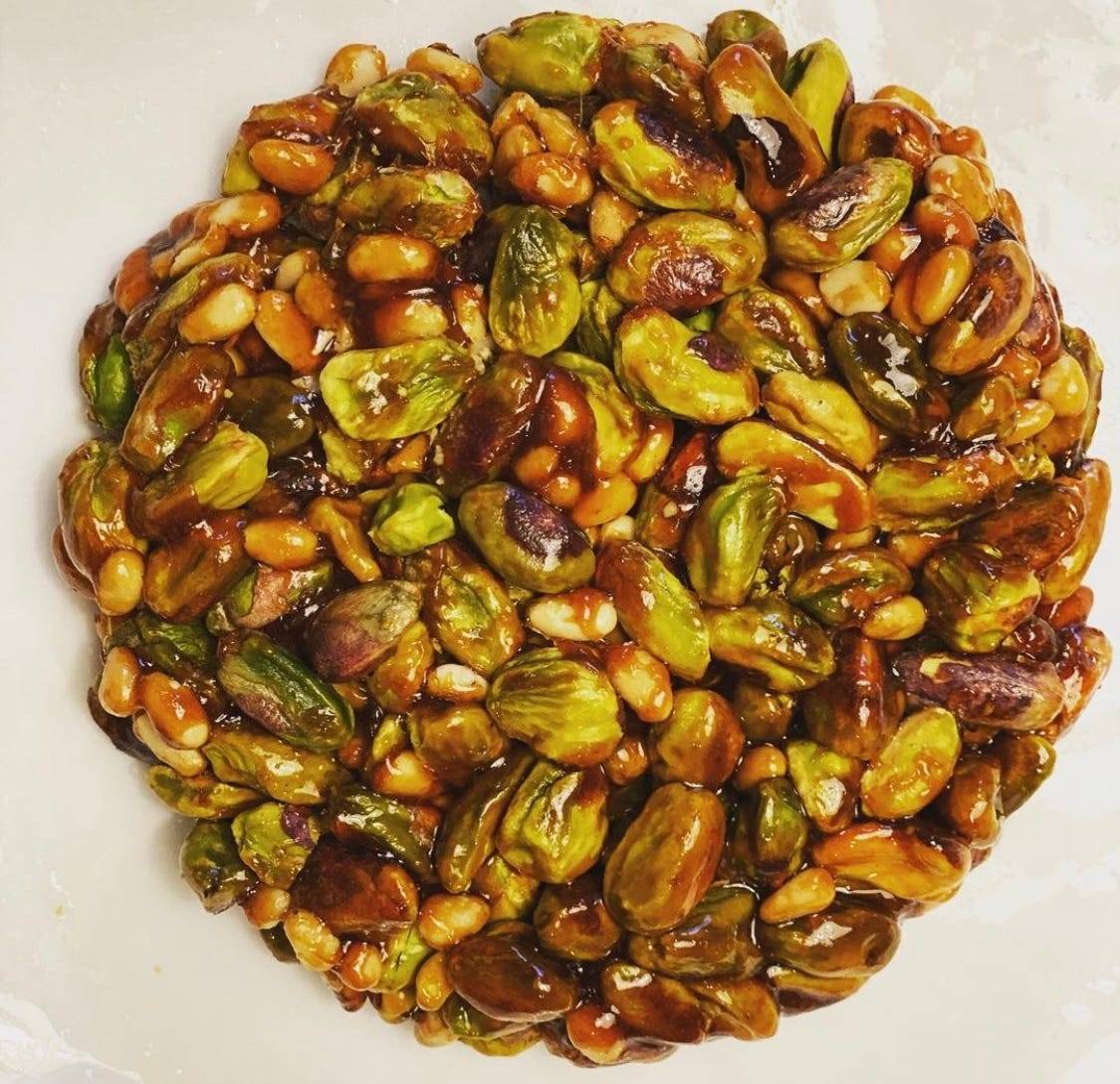
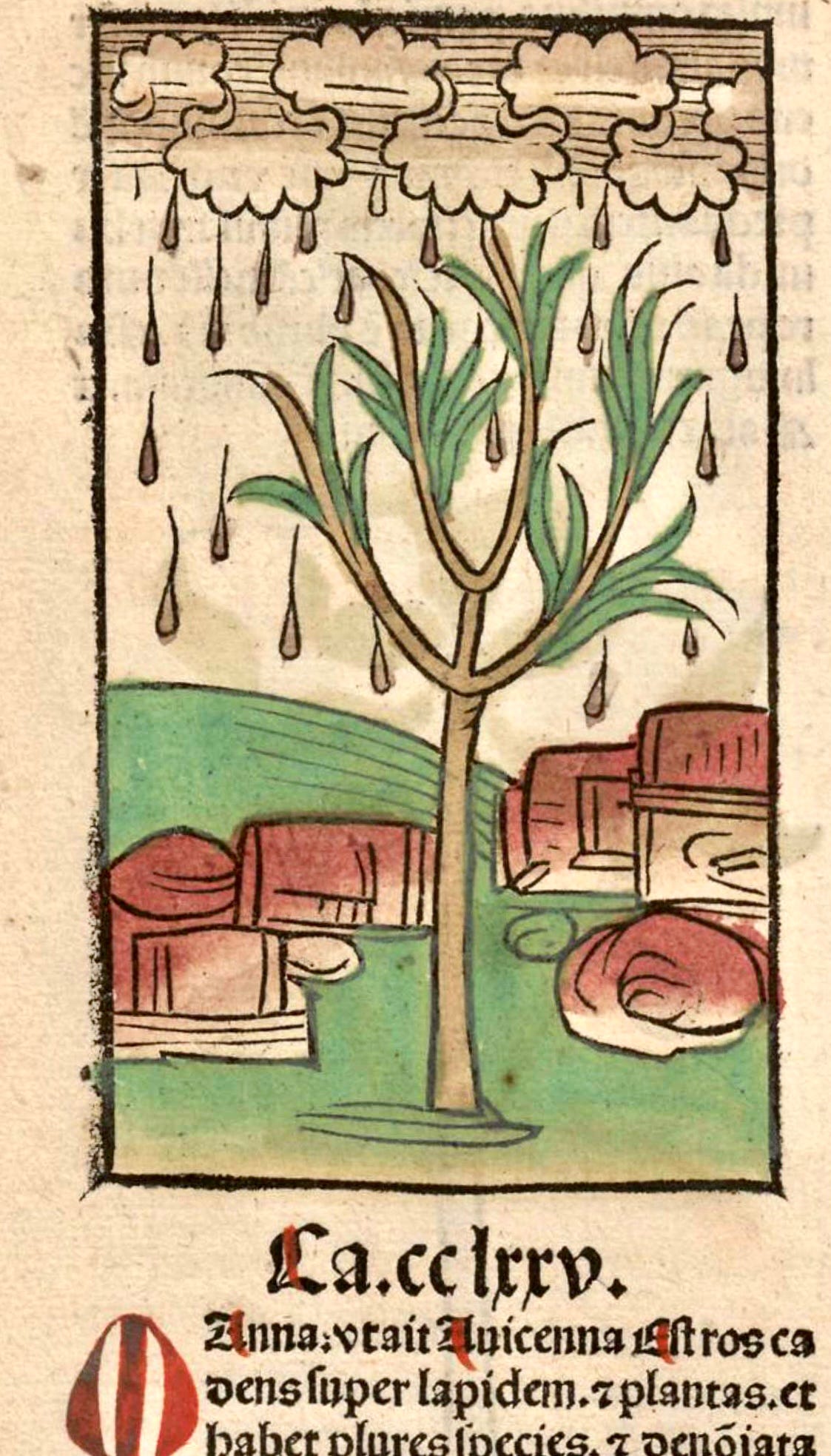
Manna Tree by Jacob Meydenbach, Ortus Sanitatis. Mainz, Germany: 1491
One of my favorite holiday sweets is nougat noir (hard black nougat). It is typically eaten with nougat blanc (soft white nougat) as part of the traditional thirteen desserts of Christmas to mark the passage of the winter solstice in Provence. With origins dating back to the Phocaeans of ancient Greece and to the Middle East, nougat, both white and black, is a holiday tradition throughout the Mediterranean. Originally made with walnuts and honey in France, legend has it that in 1548 agronomist Olivier de Serres replaced the walnuts with almonds grown in his newly planted orchards at Montélimar.
Recipes for early forms of nougat go back centuries. For example, 1st-century A.D. epicure Apicius recorded a recipe for a sweet made with walnuts, honey and eggs. 10th-century explorer and geographer Ibn Hawqal recorded tasting natif (a delicacy made of almonds, honey and the sap of the manna ash tree) in Manbij, now part of modern Syria as well as in Bukhara, now Uzbekistan. There are dozens of variations throughout the world and it would seem that almost every culture has a version of nougat and its creation. Its origins are likely Persian where it was reputedly concocted in Izfahan using the sap of the gaz or tamarisk tree to bind fruits and nuts of the harvest together in a treat that is still offered today during the spring equinox celebration of Nowruz.
Whatever its provenance, for me there is nothing that evokes family memories more than nougat. My mother passed down the tradition from her mother, whose ancestors came from Spain where turrón, their own version of nougat, was brought there by the Moors and is to this day served every Christmas.
The process is simple and requires only four ingredients: equal proportions of honey to nuts, a tablespoon of ground coriander and a tablespoon of freshly grated lemon zest.
Ingredients:
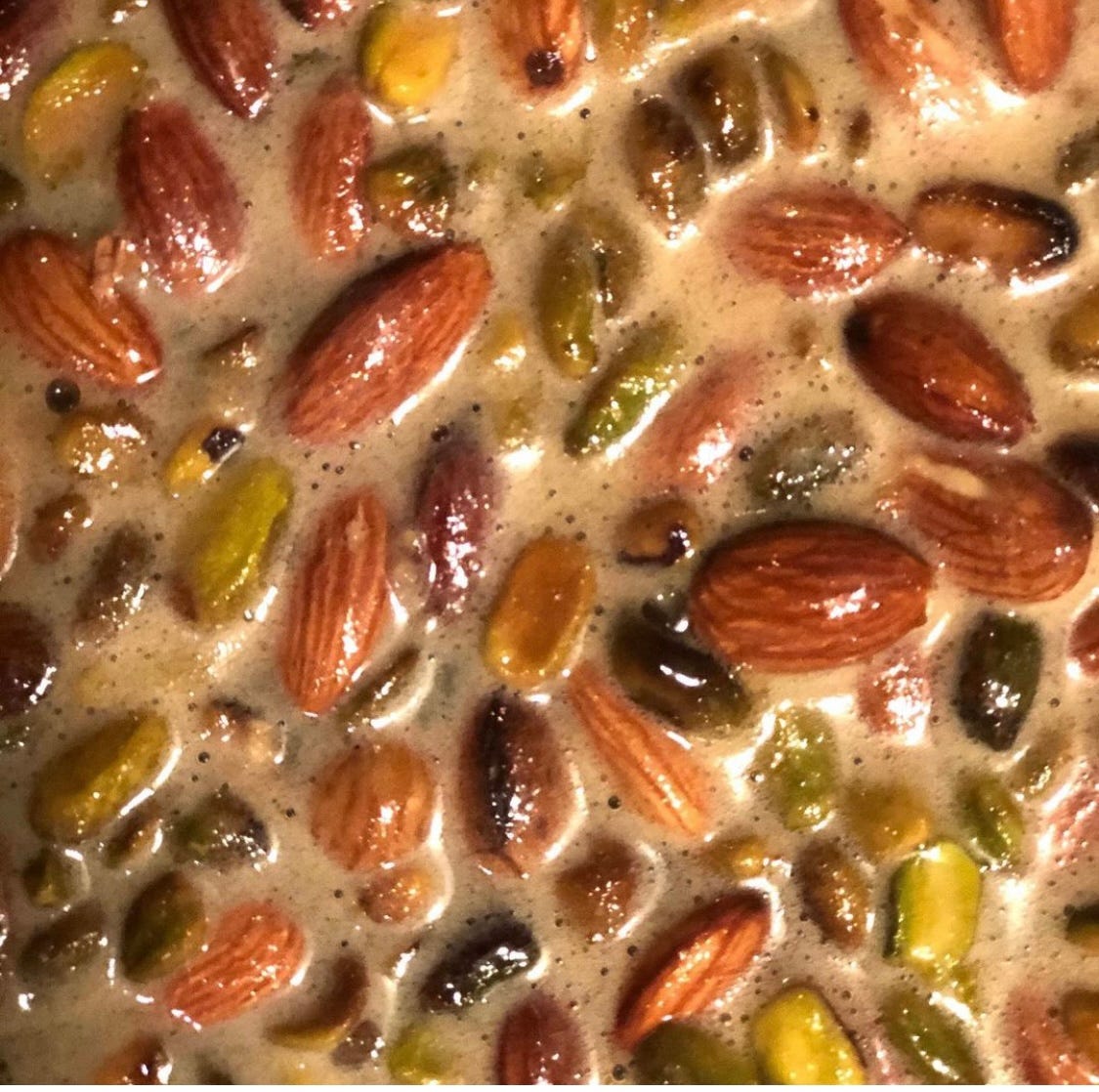
4 cups raw unfiltered honey
2 cups almonds, skins on
2 cups raw green pistachios, shelled
1 tablespoon ground coriander seed
1 tablespoon freshly grated lemon zest
Method:
Spread the almonds out evenly on a large baking sheet, sprinkle with sea salt and broil for just a few minutes, checking often. The goal is to achieve a dark roast just short of but never entirely burning them.
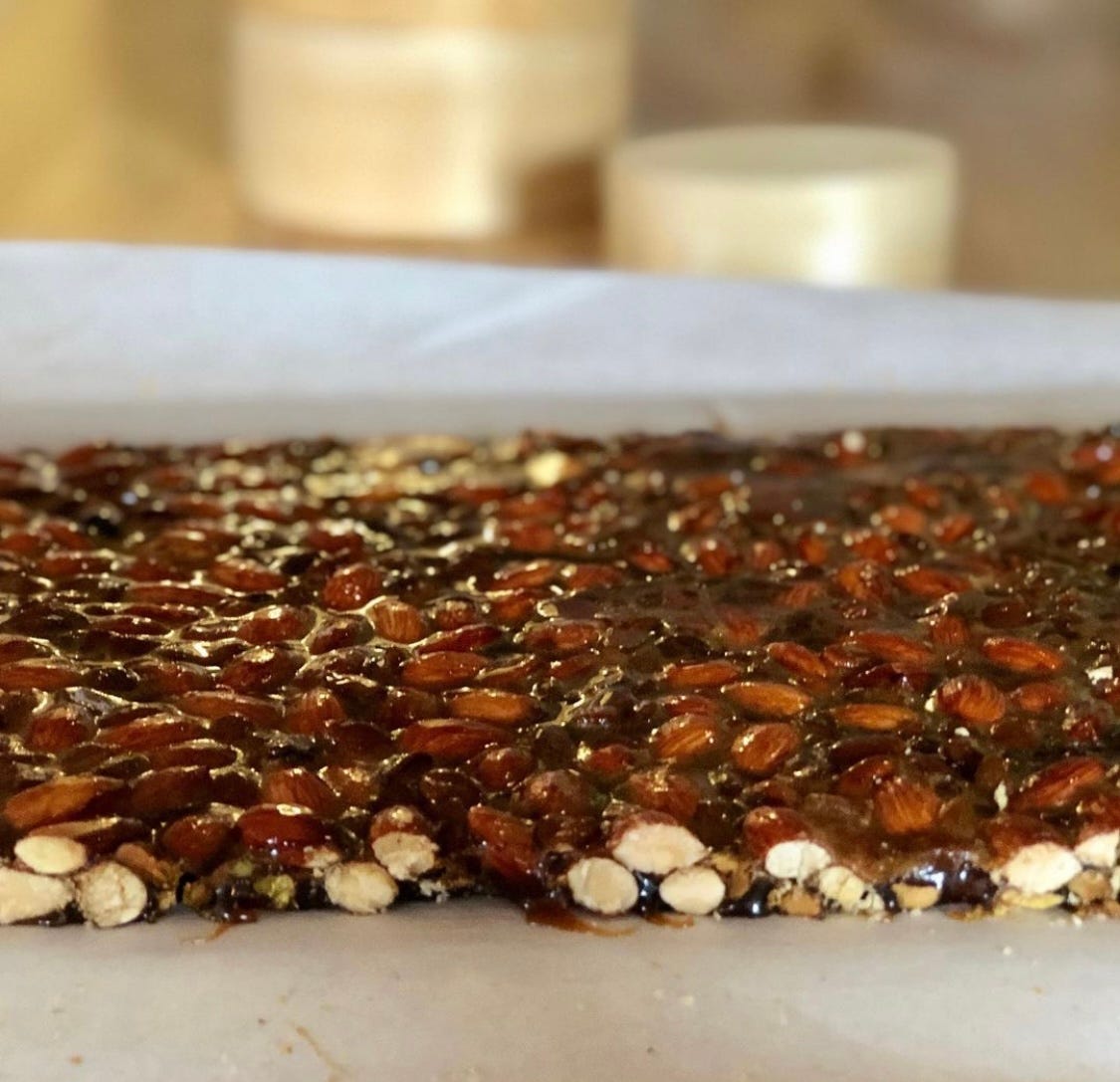
Bring the honey to a low boil, then add the almonds and pistachios, stirring well. Add the coriander then add lemon zest and keep at a low boil, stirring often, until the honey is a dark caramel color. This can take 20-30 minutes, unlike the shorter cooking time for sugar caramel. The softer texture is well worth it. Pour into a rimmed sheet pan lined with oiled parchment paper. Let cool, then cover with another sheet of oiled parchment and weigh down overnight with a cutting board covered in foil on top of which you can place a few canned goods, whatever is in your pantry.
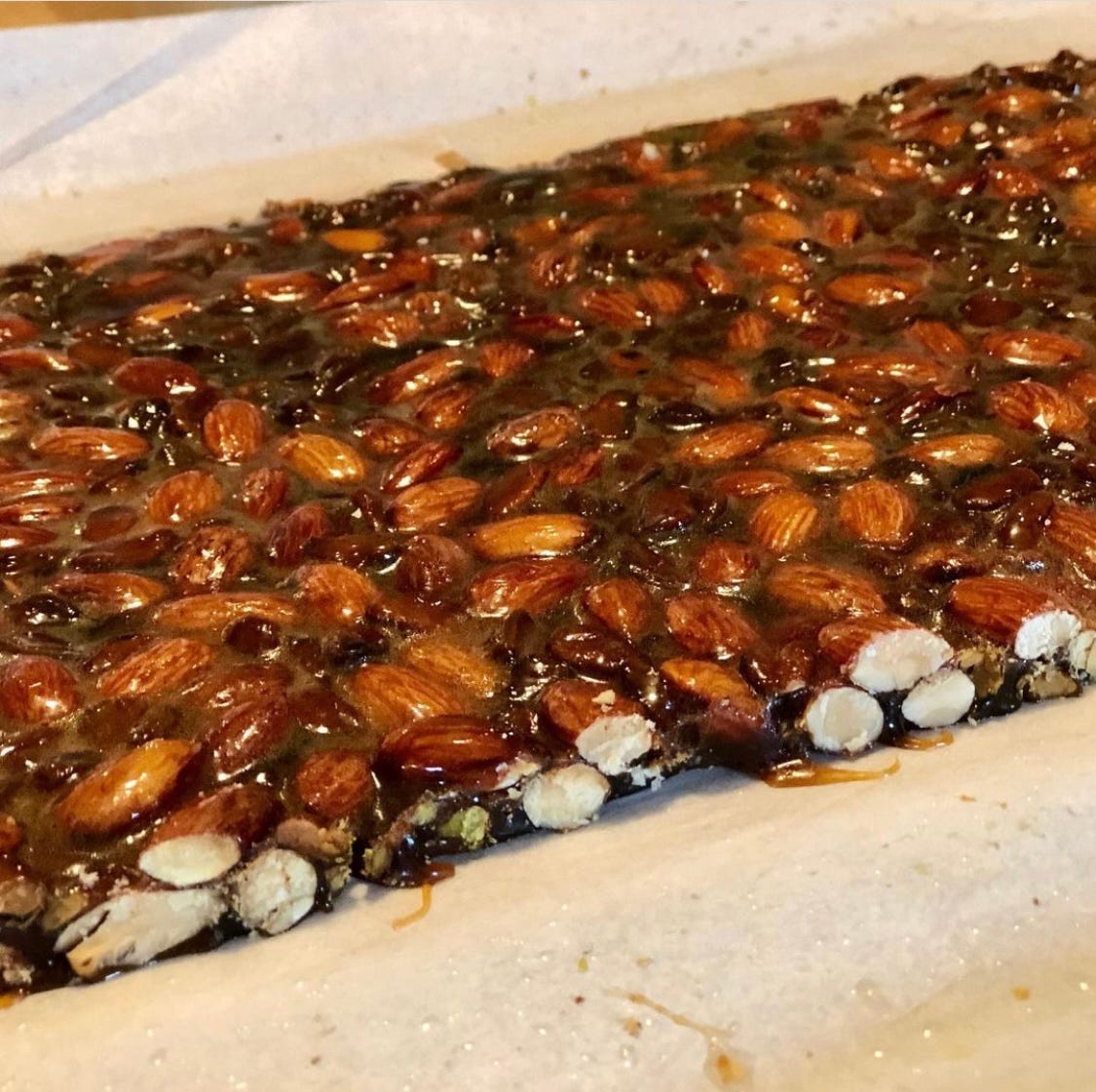
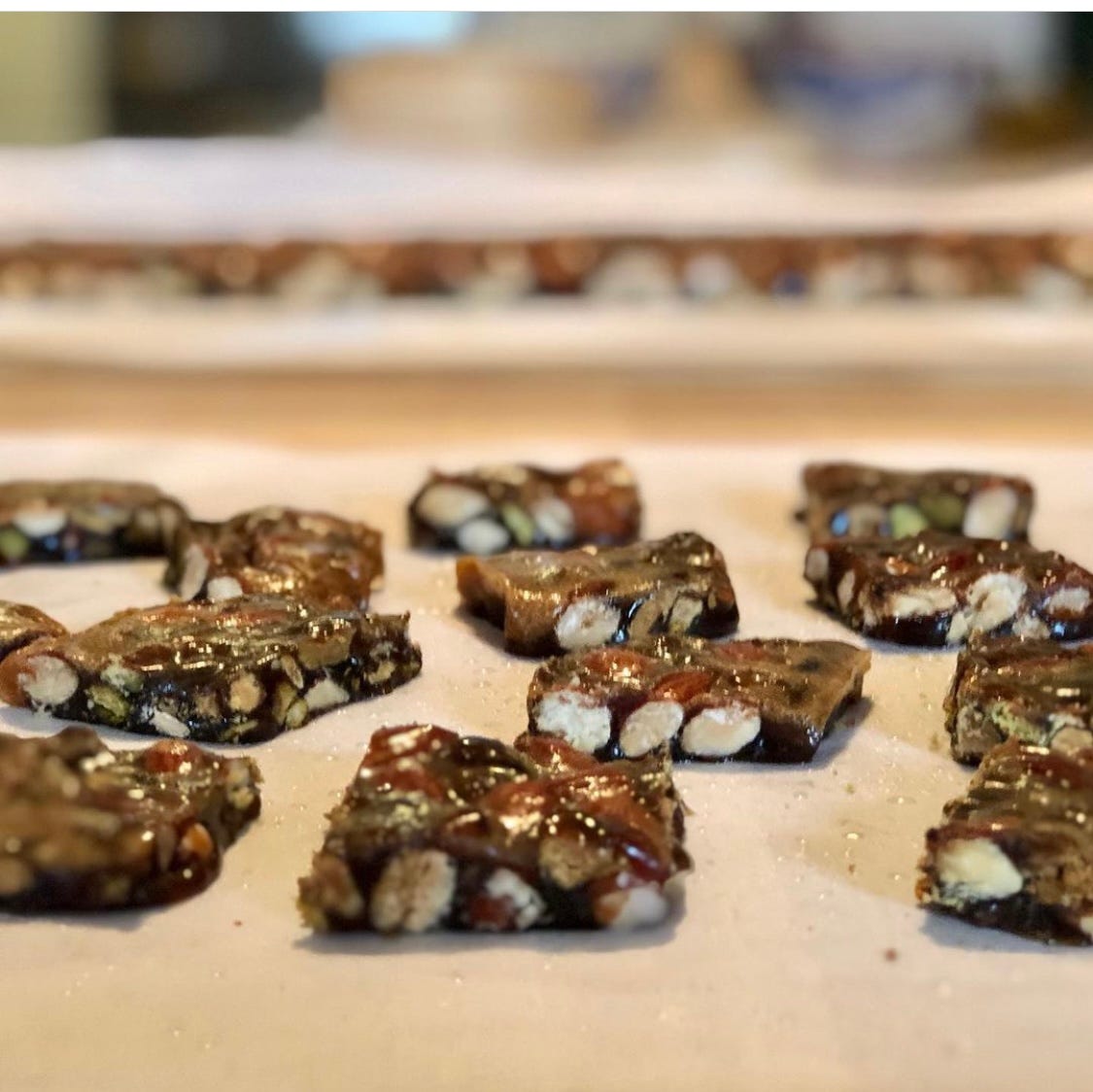
The next morning simply cut into bite-size squares with an oiled serrated knife. They are firm yet soft and absolutely sublime.
Note: these do not travel well as the honey does not remain stable unless refrigerated and can melt. If you want something more shelf-stable, I’d recommend adding sugar to the honey during the cooking process. The caramel’s texture will, however, be hard and crunchy, not soft and chewy.
For those worried about hurting their teeth, this is just as good if you lightly chop the almonds after broiling them.
Happy Holidays!
I need to learn more about these traditional thirteen desserts, please ...